Golf Clubs for Tall Golfers: Measure First, Then Choose Length and Lie
Height starts the question. Height plus wrist-to-floor creates a static starting point; impact and ball flight finish the fit.
The buying verdict
Do not order “+1 inch and upright” from height alone. Measure height and wrist-to-floor, use a manufacturer chart as a static starting point, then verify iron length and lie dynamically. Tall golfers with long arms may still fit standard length.
Compare products for this decision
Compare the exact specifications against your needs. As an Amazon Associate, we earn from qualifying purchases.
What matters before you spend
- •PING’s official static chart uses both height and wrist-to-floor to recommend a starting length and lie color code.
- •Length and lie are separate choices: length affects posture, contact and balance; lie affects how a lofted face points at impact.
- •Adding length changes total weight, swing weight and how the club plays, so an extension is not a free ergonomic adjustment.
- •Irons and wedges deserve the closest length-and-lie check; driver, woods and putter should be fit for their own tasks rather than scaled by one formula.
Choose your starting point
Match the row to your situation, then complete the verification step before buying.
| Your situation | Start here | Why | Verify before buying |
|---|---|---|---|
| Tall with long arms and average wrist-to-floor | Test standard length first | Longer arms can offset height, leaving hand position near a standard range. | Check posture, centered contact and dynamic lie instead of assuming “tall” sizing. |
| Tall with high wrist-to-floor measurement | Test longer irons alongside standard | A longer starting build may allow comfortable posture and centered contact. | Confirm lie dynamically; extra length also changes balance and effective playing geometry. |
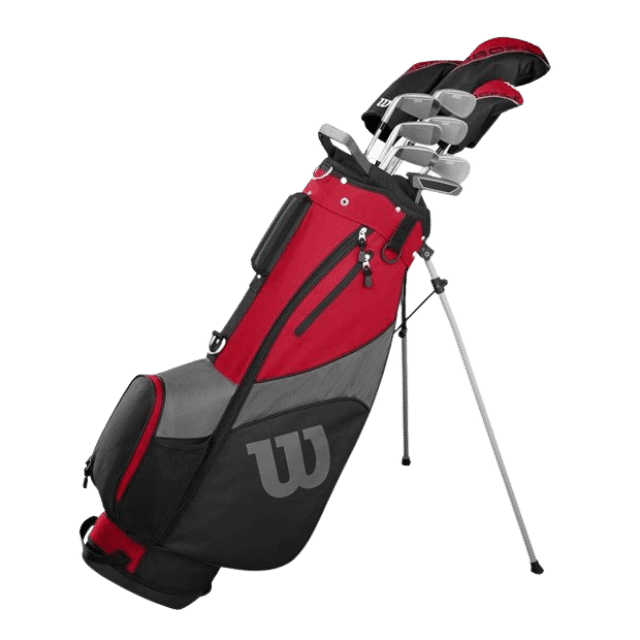
| Beginner who needs a complete bag now | Tall-size package set if its published specs match your starting fit | It is simple and often less expensive than custom-building every club. | Confirm actual club lengths, included clubs, flex, handedness and return policy—not just the word “tall.” |
| You already own irons you like | Ask a club builder to evaluate extensions, new shafts and lie adjustment | Retrofitting can preserve familiar heads and control cost. | Get the final swing weight, grip size, bendability and total quote before work begins. |
| You strike the center but shots start consistently off line | Test dynamic lie before changing length | Start direction with irons may point to delivered lie rather than club length. | Use impact marks or a line test with a fitter; do not diagnose from divots alone. |
Measure wrist-to-floor correctly
Wear the shoes you normally play in and stand naturally on a level, hard surface. Let both arms hang relaxed. Have another person measure vertically from the prominent wrist crease to the floor; do not bend sideways to read the tape yourself.
Record height and wrist-to-floor, then plot both on the current chart from the manufacturer whose clubs you are considering. “Standard” is not one universal length or lie across brands, so use the chart as a brand-specific starting point.
Length and lie solve different problems
Length influences how far you stand from the ball, your posture, strike location and the club’s balance. Too short may feel cramped, but standing poorly can also be a technique issue; pain is not a reason to self-prescribe an exact extension.
Lie angle describes how the shaft and sole are oriented. Because an iron face has loft, a delivered lie that is too upright can point the face left of the target for a right-handed golfer; too flat can point it right. The effect reverses for a left-handed golfer.
Static height and wrist-to-floor cannot see how you deliver the club. That is why the final check should use ball flight and face-contact evidence with the candidate length.
Standard, tall package set, custom order or retrofit?
Standard clubs are the best-value answer when your measurements and strike fit them. Do not pay for extra length merely because you are tall.
A tall package set is convenient for a new golfer who needs an entire bag. Its limitation is that “tall” may hide one fixed extension, one lie, one shaft flex and a limited club makeup.
A custom-order iron set is the cleanest route when you know length, lie, shaft, grip and head. It costs more, but the build arrives integrated rather than modified later.
Retrofitting can make sense for heads you already like. Extensions, replacement shafts, lie bending and new grips all have limits and can change feel, so get a club builder’s written build plan and total cost first.
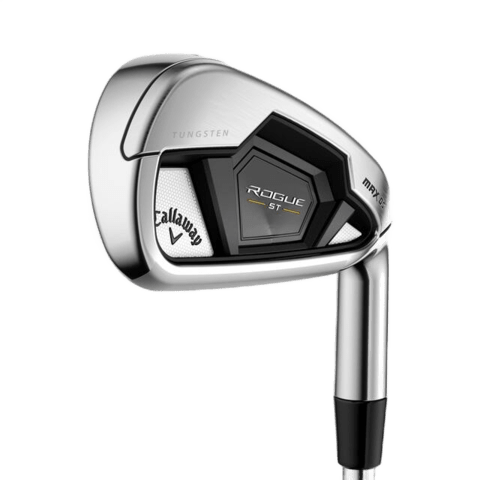
Before paying for a full iron set, compare head choices and the clubs you will actually carry alongside the fitted dimensions.
Fit the bag by club type
Irons: establish a comfortable test length, then verify lie and strike. Ask whether the recommendation applies uniformly through the set or changes by club.
Wedges: test full and partial shots. Some golfers prefer wedges slightly shorter than a uniformly extended iron progression for control; the correct answer is the one that preserves posture and contact on the shots you play.
Driver and fairway woods: longer is not automatically better for a tall player. These clubs already have long shafts; center contact and control should decide playing length.
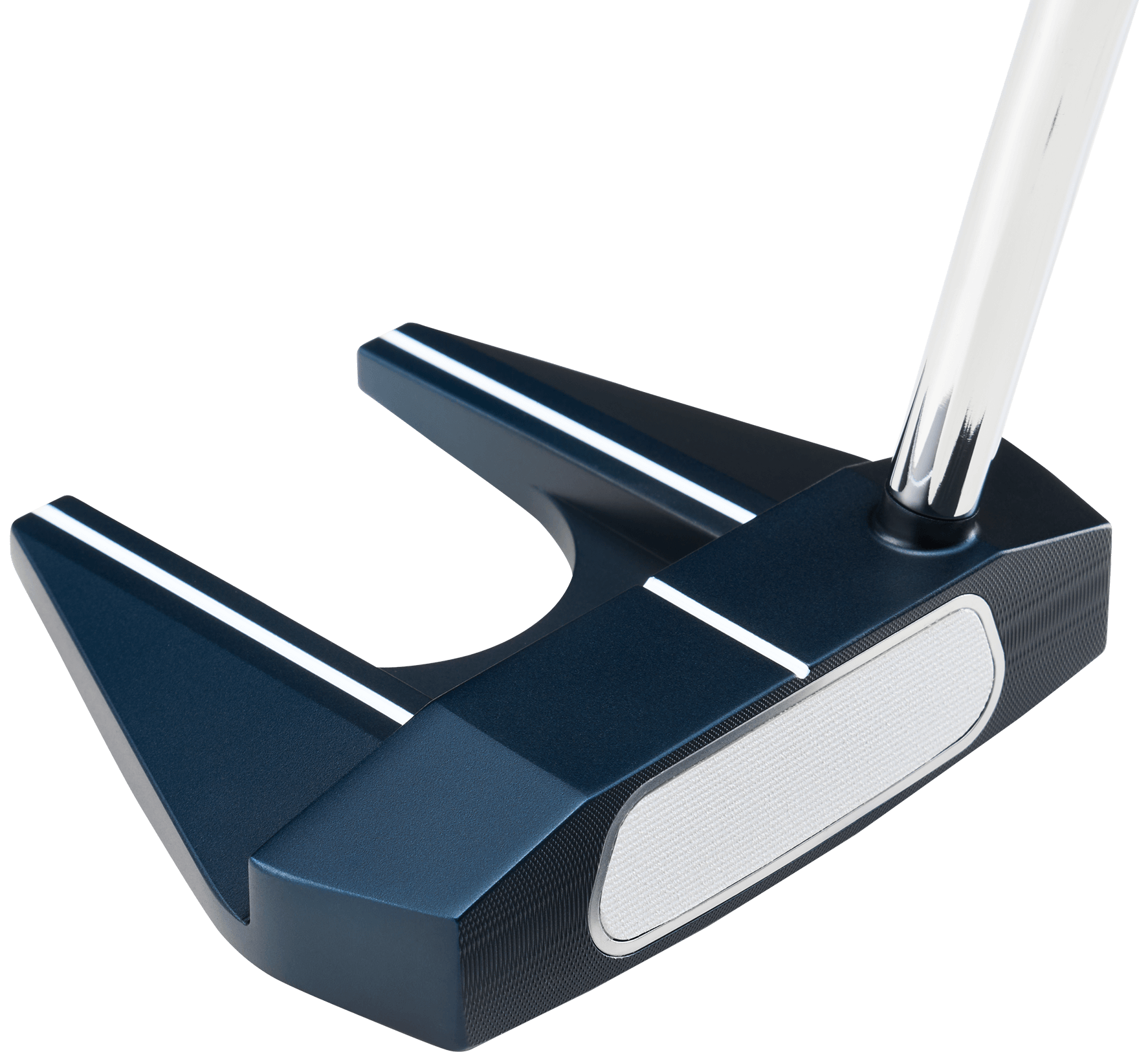
Putter: eye position, setup comfort, stroke shape and where the ball sits relative to your feet matter more than a height-only chart. Test the posture you can repeat without tension.
For the driver, use swing speed and tempo to shortlist shafts for a test rather than carrying an iron-shaft label across the bag.
Give the putter its own check with our 33-, 34- and 35-inch putter-length comparison.
A fitting session that protects your budget
Tell the fitter your budget before testing. Ask to compare standard length with the static-chart recommendation using the same or similar head and shaft. Record the exact club number, measured playing length, lie adjustment, shaft model and flex, grip and final price.
Judge the normal pattern: posture, strike location, start direction, carry consistency and comfort. Do not allow three good swings to end the test. You need enough shots to see your ordinary miss.
Before ordering, ask whether lie is measured relative to the brand’s standard, whether the head can be bent later, and whether the shop will recheck lie after delivery.
Before-you-buy checklist
- 1Measure height and wrist-to-floor twice in golf shoes on a hard, level floor.
- 2Use the current chart for the manufacturer you plan to buy; standards differ.
- 3Test standard length and the recommended longer option in the same club category.
- 4Verify dynamic lie after choosing length, using ball flight and face-contact evidence.
- 5Check shaft weight and flex, grip size, swing weight and the actual final club length.
- 6Get the full price, return policy and post-delivery lie-check policy in writing.
- 7Fit driver, woods, wedges and putter separately rather than copying the iron adjustment.
Questions that usually come next
Do all golfers over 6 feet 2 inches need longer clubs?
No. Arm length changes wrist-to-floor, and delivery changes the dynamic result. Some tall golfers fit standard length; others need extra length. Use height plus wrist-to-floor as the starting point and hit both options.
Can I buy a tall package set without a fitting?
You can if the published lengths, flex, handedness and club makeup are close to your measured starting point and the seller has a good return policy. A brief static measurement is still better than buying from the “tall” label alone.
Should longer irons also be more upright?
Not automatically. Length changes how the club sits and swings, but the final lie should be checked dynamically after length is chosen. Order lie as a separate specification relative to that manufacturer’s standard.
Can a shop extend my current irons?
Often, but feasibility depends on shaft material, existing build, desired change and the club builder’s limits. Ask how the work changes swing weight, total weight, grip and warranty before approving it.
Do I need longer wedges too?
Maybe, but do not copy the iron adjustment blindly. Test full swings and partial shots. The wedge length should preserve comfortable posture and predictable contact for the short-game motions you use.
Does a tall golfer need a longer driver?
Not simply because of height. Driver length is primarily a speed-versus-center-contact decision, and many golfers gain control from a shorter build. Test strike and dispersion.
What exact specs should appear on my order?
Record the model and club makeup, final playing length or adjustment from that brand’s standard, lie adjustment, shaft model and flex, grip model and size, handedness and any swing-weight target.
Sources and fact-check notes
We favor manufacturer fitting material for product-specific claims and use independent guides to identify buyer questions. Sources were checked on September 28, 2026.
- PING fitting color code chart
Primary source for using height and wrist-to-floor together as a static length-and-lie starting point.
- Callaway custom fitting overview
Primary source for fitting head, loft, flex, shaft and weight together.
- Golf Monthly: how to measure wrist-to-floor
Established instructional source for the measurement method and its role with height.